I quit my job and moved country to make robots that will fix Europe’s housing crisis.
8 January 2026
So should you...
At 16, after a brief stint at rebellion, I came to a frustrating realisation; despite wanting to break away from my parents’ hopes that I would become an engineer, I actually loved it. Engineering felt like the stuff of dreams: I remember the adventurer-turned-engineer Hugh Herr’s custom bionic limbs being a particular testament to this. In my mind, becoming an engineer meant you could quite literally build your way to a better future.
And the future felt like it needed building. Post 2008, the outlook in the UK and much of Europe felt increasingly bleak. You did not need statistics to see it, you just had to walk outside. Housing was deteriorating, high streets were disappearing, and the places where communities came together felt fewer and farther between.
So I went to university. I loved studying, landed an internship at Dyson doing genuinely exciting R&D (novel air bearings enabling high speed rotors to float on a cushion of air) and could not wait to graduate and start making things that mattered.
Three years later, I wanted to quit engineering altogether.
What changed?
I wanted to work on ambitious, high impact problems, but that did not feel possible in the UK. The paths ahead seemed narrow and frankly, boring. The work felt slow and fragmented, I didn’t feel like I was learning, and the pay progression made it hard to believe I was moving towards anything meaningful.
I wanted to feel excited again. So, in classic twenty something fashion, I decided the solution was obvious: do another master’s degree. With more skills, surely I could find a role in robotics somewhere? I quit my job, prepared to move back to London, and got ready to start again.
Or so I thought.
At the end of 2021, I received a LinkedIn message (usually never a good sign) that sounded too good to be true. A Dutch start up, called Monumental, was trying to build beautiful, affordable homes using robots. A call with the founders and a visit to Amsterdam to meet the 5 person team, convinced me that this was a problem that needed to be solved, and I should drop out of my master’s and take the leap.
There was a lot to be nervous about. The first prototype was rough: most of the time the gripper would come slamming down, accompanied by the sound of breaking hardware (see vid for a rarer successful test).
I’d also been reading SAM, a book about a startup that tried and failed to tackle this exact problem. Surprise, surprise: it’s a really hard problem to solve. I had ignored my parents’ advice, changed jobs, dropped out of university, and moved country. This had to work.
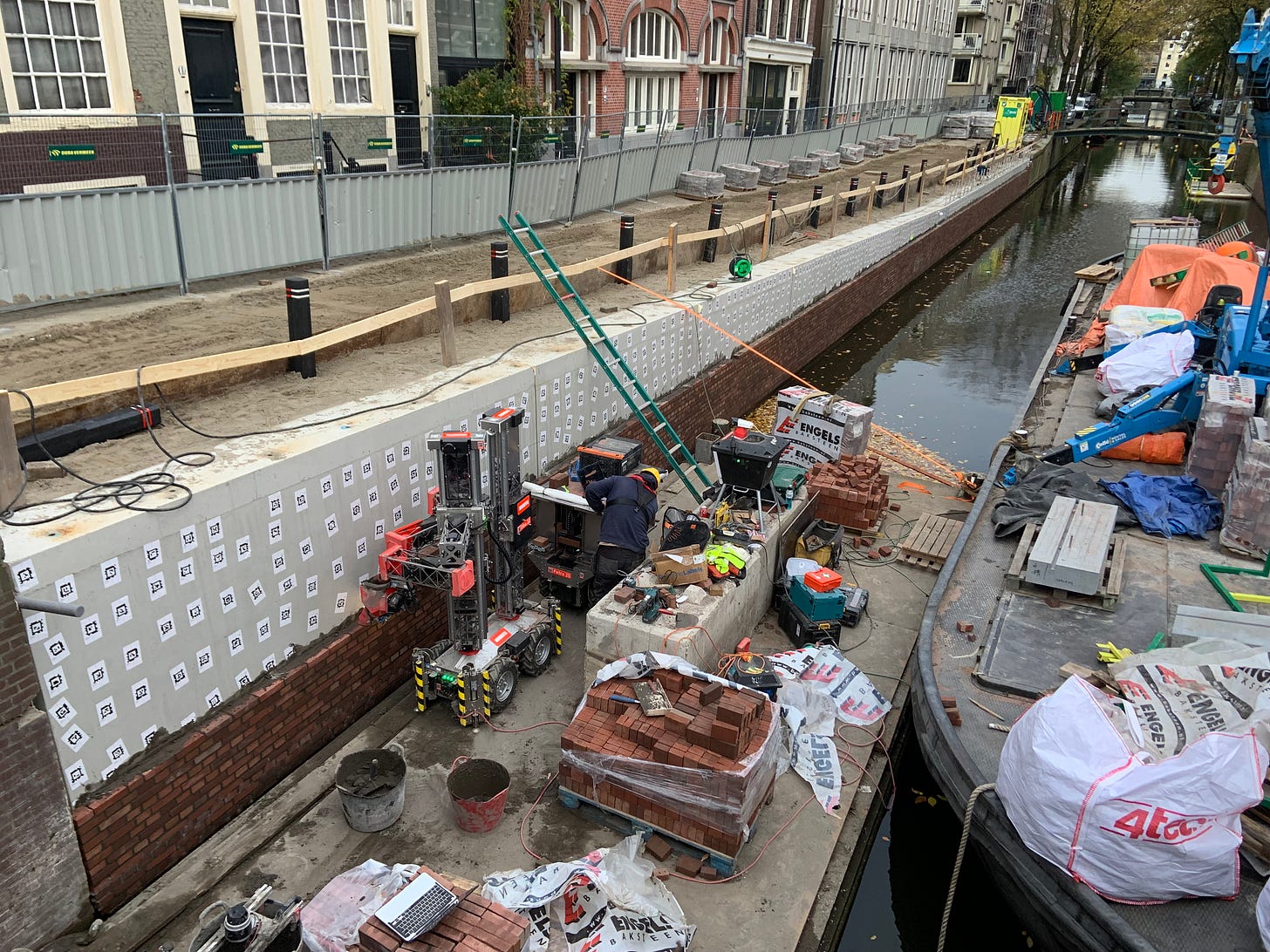
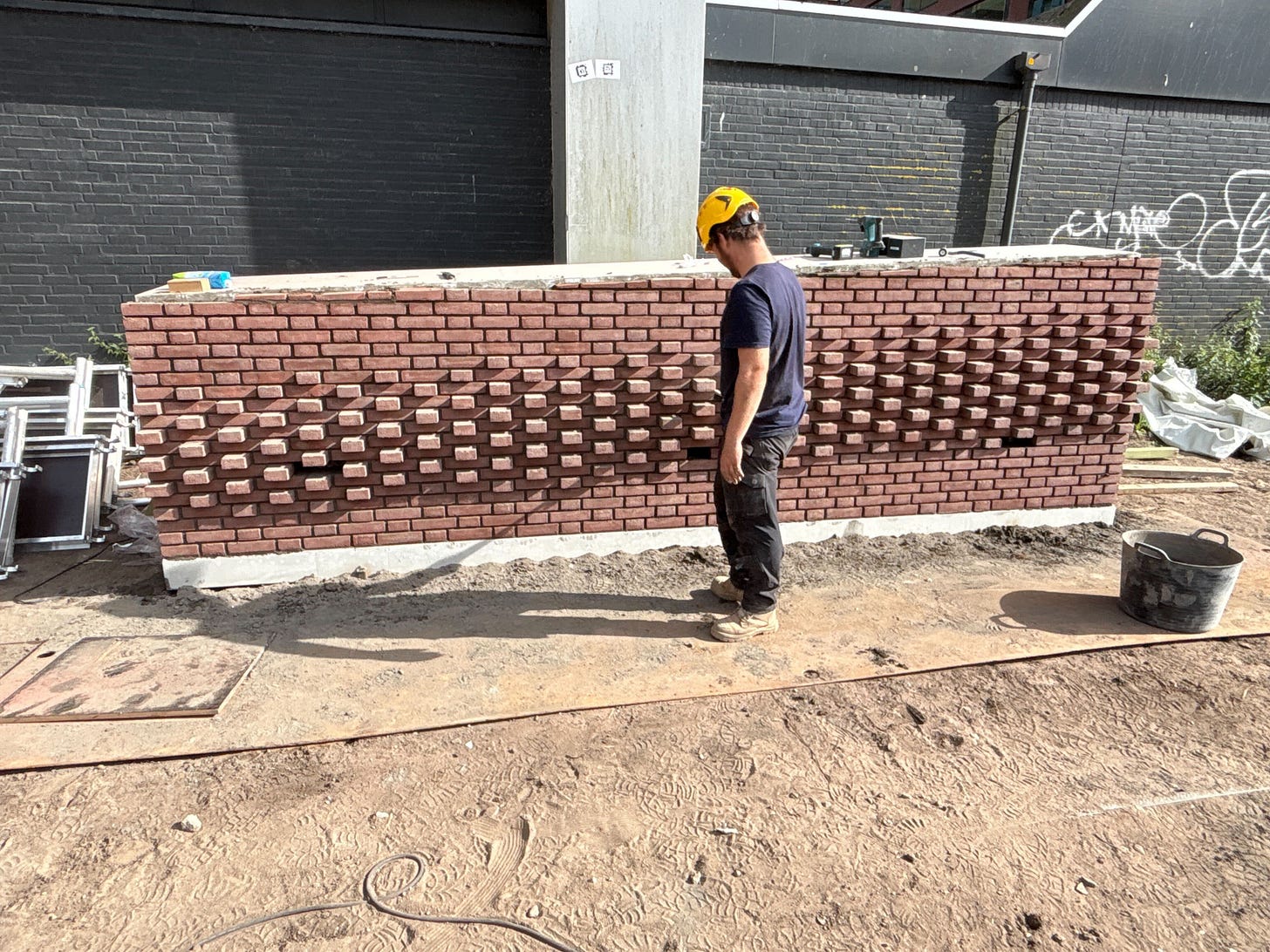
Four years later, a lot has changed. We’ve gone from 5 people to nearly 100, productised and scaled our robots to a fleet of 35 systems today and crucially, laid 170,000 bricks across the Netherlands this year, building homes, public buildings and (unexpectedly) over 150m of canal walls in Amsterdam’s historic centre.
Our first 24 hour, non-stop build!
Joining Monumental was one of the best decisions I’ve made. I’ve listed a few reasons below.
Automating construction is an incredibly fun, insanely hard problem to work on. Having a job with both in equal measure feels like a genuine privilege. When I joined, we were focused on developing hardware to automate bricklaying within tight constraints. Now we’re tackling full system autonomy, operating at height, across entire construction sites. The problems keep getting more interesting.
Testing new wall-pointing capabilities
I’ve become a better engineer here. We had 12 months to ship an MVP to our first deployment. With a small team, we had no choice but to do an insane amount, in parallel, and fast. Over those 12 months, we invented, broke, and rebuilt around 80% of our hardware. The problems don’t fit neatly into “mechanical engineering”: you get pulled into electronics, computer vision, control, and inevitably, onto actual building sites. This isn’t engineering from behind a desk.
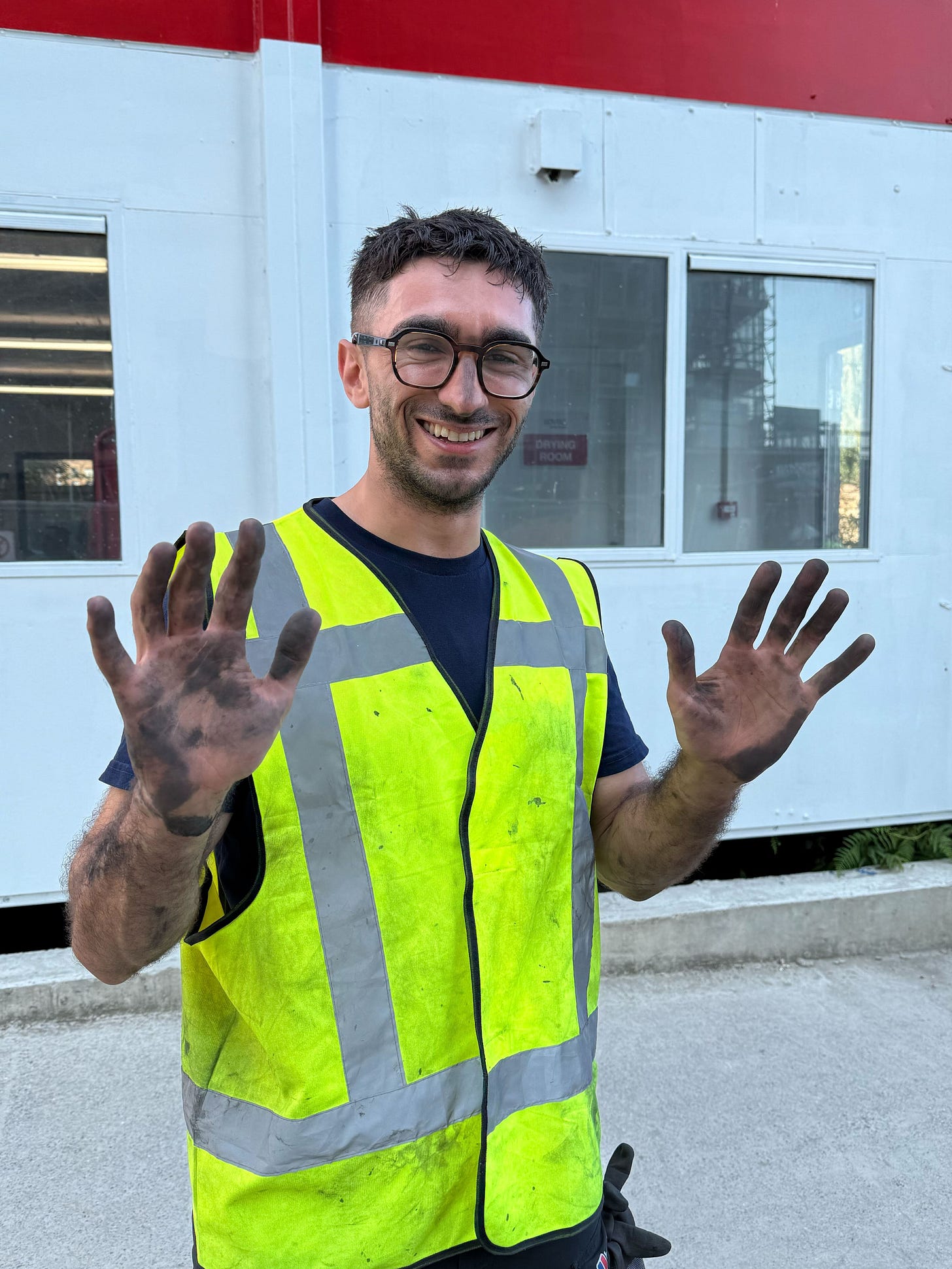
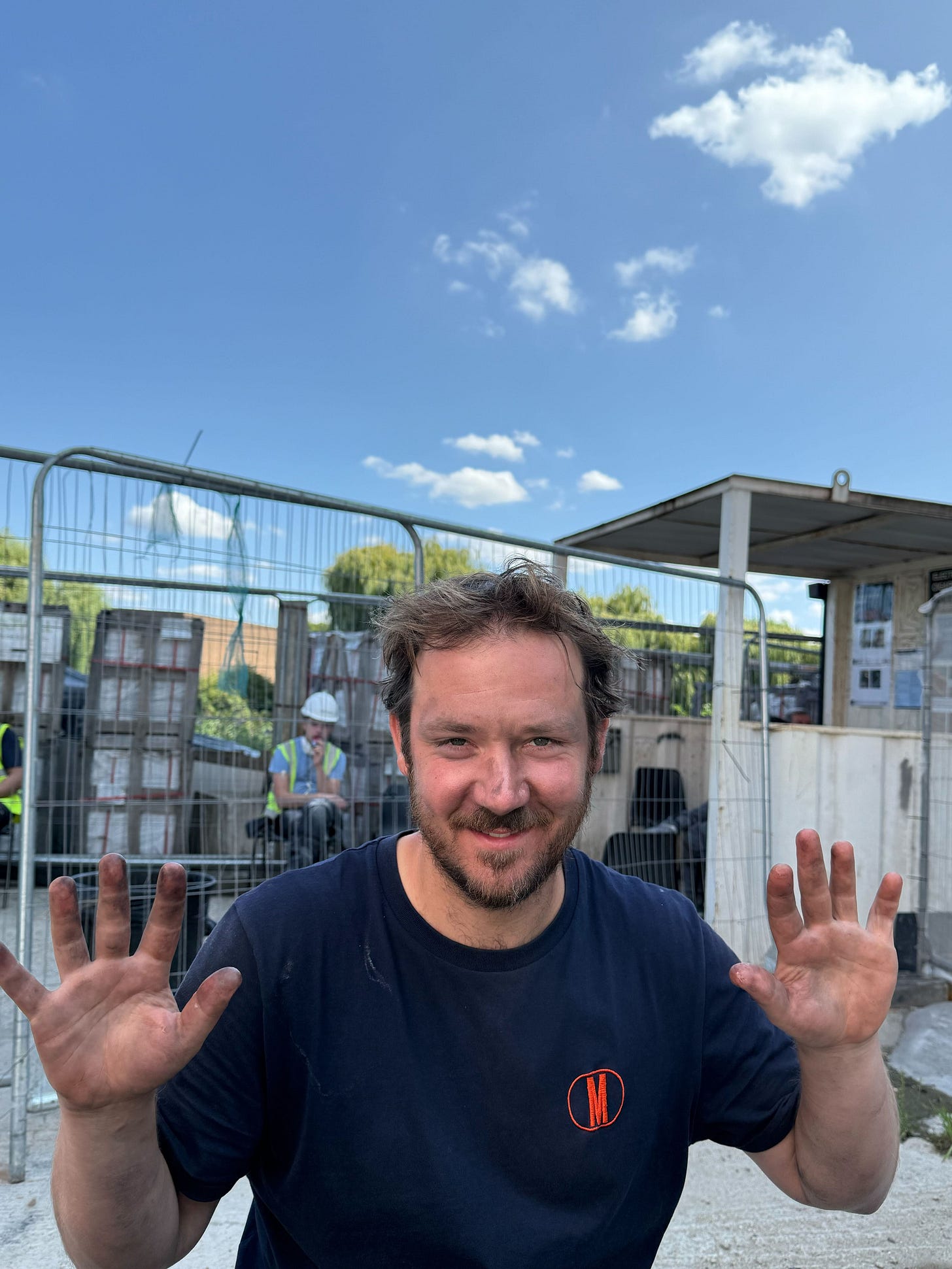
You get to see your work out in the world! Our robots build homes and spaces people will live in. Achieving this requires you to take on many different roles. I've worked across the entire lifecycle of a robot: prototyping with hardware and software teams, scaling our fleet in the workshop, deploying alongside operators across the Netherlands, repairing machines returning for maintenance.
I've also helped scale our team. My favourite: the workshop. It started as one person in an empty bike shed with an unreliable Ender 3, churning out our first crane prototype in four months. Today it's 20 people producing thirty robots per quarter, while supporting prototyping, fleet maintenance, and the daily surprises of a growing startup.
Our central Amsterdam facility, complete with a fully equipped workshop, printing farm and testing space for robot bricklaying
You’re given real resources to move fast. Company card on day one. You’re trusted to decide when spending money to test something tomorrow outweighs a week’s delay. That urgency applies everywhere: our favourite hiring timeline is calling someone Monday, interviewing Tuesday, start Wednesday.
If any of this appeals to you, then apply to Monumental and reach out to our Chief of Staff, Dom. We are trying to fix construction at scale. That means thousands of robots, across continents, working on everything from single family homes to high rises. Come work on a problem that matters, with a team that cares deeply about what they do and who they work with. It is challenging, meaningful, and a lot of fun 🙂